What Is FSI in Real Estate? Meaning, Calculation and Its Impact on Property Development
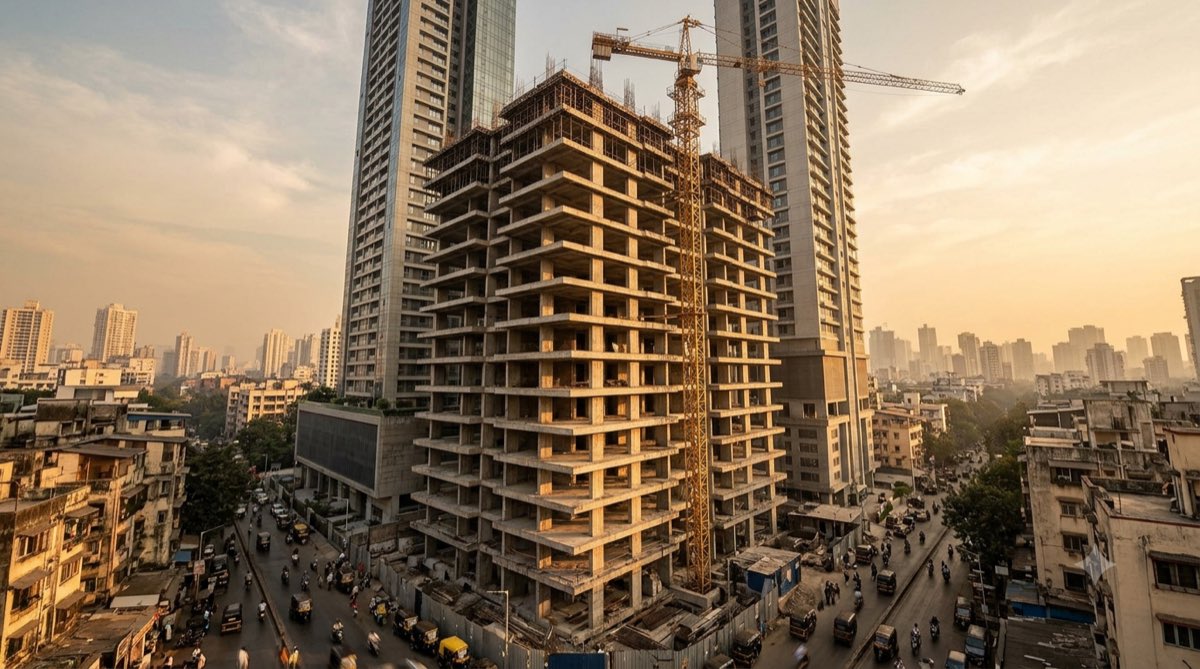
What is FSI in real estate? FSI stands for Floor Space Index. It is the ratio of the total floor area counted under applicable FSI regulations to the area of the plot. A plot with an FSI of 2 can carry up to twice its own area in countable floor space.
This guide explains what FSI in property means for a plot and the project built on it. By the end, you will know how to read an FSI figure and where to verify it.
What Is FSI in Real Estate?
FSI is a planning rule set by local authorities. Some cities call it Floor Area Ratio (FAR). The two terms are used interchangeably.
Authorities use it to manage density, since roads and water systems have to serve everyone in an area. A lower FSI keeps density down. A higher FSI allows more floor area on the same land.
The limit changes with the city, the zone and the type of use.
How Is FSI Calculated?
The formula is simple.
FSI = Total floor area counted under FSI regulations ÷ Plot area
To find the most you can build, turn it around.
Maximum floor area = Plot area × Permissible FSI
Here are hypothetical examples with simple numbers.
| Plot area | Permissible FSI | Maximum floor area |
|---|---|---|
| 500 sq m | 1.0 | 500 sq m |
| 1,000 sq m | 1.5 | 1,500 sq m |
| 2,000 sq m | 2.0 | 4,000 sq m |
Floor area is counted across all floors together. On the 1,000 sq m plot you could build 750 sq m on each of two floors or 500 sq m on each of three.
The result is a ceiling, not a promise. Setbacks, height limits and other local rules can reduce what you can actually build. Rules also decide which areas count and whether gross or net plot area is used.
What Are the Different Types of FSI?
The permissible FSI on a plot can come from more than one source. Many cities set a basic limit first and allow extra area on top of it.
Basic FSI
Basic FSI is the standard limit for a plot. It depends on the zone and the type of use. Some rules also link it to the width of the road in front of the plot. No premium is charged to use it. Normal sanction and scrutiny fees still apply.
Premium FSI
Premium FSI is extra floor area bought from the planning authority. Eligibility depends on local rules. Authorities often allow it only where road width and infrastructure can support more density. The charge is set by the authority and is often linked to the government land rate. Each zone also has a cap.
Additional FSI Through Transferable Development Rights (TDR)
When an owner gives up land for public use, such as road widening, the authority may compensate with development rights instead of cash. These are issued as a TDR certificate. The owner can use the rights on another plot or sell them to a developer.
TDR can be used only in zones and up to the limits the local regulations allow. Some regulations also fix how it combines with premium FSI.
Why Is FSI Important in Real Estate Development?
Land valuation. Developers often value land by the floor area it can carry. Two plots of the same size can differ in price if their permissible FSI differs.
Construction planning. FSI sets the area to be divided into homes, shops or offices. It shapes the design and parking plan. Any premium or TDR also enters the budget.
Project feasibility. A project works only if its permitted area can be sold or leased at a price that covers land, construction and extra FSI costs. A lower limit than expected can make it unviable.
For office and retail projects, permitted floor area also sets how much space can be leased. If you want to see how such assets are offered in shares, Finplify's page on fractional investment in commercial real estate shows its commercial listings.
A higher FSI does not guarantee higher income or value. Property values can fall. Rental income is not assured and exits can take time.
How to Check the Permissible FSI of a Plot in India?
FSI is not a single national number. You need the rules for the plot's own location.
- Find the planning authority. This is usually the municipal corporation or a development authority.
- Identify the zone and road width. The development plan or master plan shows the land-use zone.
- Read the Development Control Regulations. These are also called building bye-laws. They list basic FSI, premium FSI and TDR limits by zone.
- Check official records. Ask the authority for the plot's zoning details. For an existing building, review the sanctioned building plans. They show the approved FSI and how much has been used.
- Confirm with a professional. An architect or lawyer can explain how the rules apply to the plot.
In Mumbai, the Development Control and Promotion Regulations (DCPR) 2034 apply within Greater Mumbai. You can start with the Municipal Corporation of Greater Mumbai portal.
Most of the rest of Maharashtra follows the Unified Development Control and Promotion Regulations (UDCPR), notified in December 2020. A few areas have their own rules. The state's Urban Development Department is the official source. Other states have their own regulations.
Conclusion
Before you invest in any property, check the permissible FSI with the local planning authority and compare it with the sanctioned plans. If you would like to explore ownership with a smaller starting amount, you can read about fractional real estate investing India on Finplify or speak to a wealth manager.
This post is for information only and is not investment advice. Please assess your own situation or consult a qualified professional before making any decision.
FAQs
How Does FSI Affect Property Value and Investment Decisions?
A higher permissible FSI can raise a plot's development potential, which may influence its price. Value also depends on location, demand, approvals and market conditions. Property values can fall.
Does FSI Include Parking Areas and Balconies?
It depends on local rules. Some authorities exclude areas such as parking, staircases, lift shafts or balconies from FSI. Others count them fully or allow them on payment of a premium.
Can FSI Be Increased After Purchasing a Plot?
Sometimes. Where local rules allow, an owner can add premium FSI or TDR after getting the required approvals. The total cannot go beyond the cap set for that zone.
Does Higher FSI Mean More Floors Can Be Constructed?
Not always. FSI limits total floor area and not height. Height limits, setbacks, fire norms and open space rules also decide how tall a building can be.
What Happens if Construction Exceeds the Permitted FSI?
The outcome depends on local laws and the authority. It may refuse approvals, issue a notice, levy a penalty or ask for the excess to be removed. Some places allow limited regularisation of minor deviations. Others do not.
Is FSI Applicable to Agricultural Land?
FSI rules apply to land generally. What can be built on agricultural land depends on state regulations, the land-use zone and the permissions granted. Some states allow limited farm-related structures. Others require a change of land use first. If you are weighing agricultural land investment, Finplify's managed farmland page shows how such listings are presented.
Can the Permissible FSI Change Over Time?
Yes. Authorities revise development plans and regulations from time to time. Mumbai's DCPR 2034, for instance, replaced the earlier 1991 plan. Check the rules currently in force before you rely on any figure.
Does Unused FSI Increase a Property's Resale Value?
Not automatically. Unused FSI does not mean more construction is permitted. Any addition needs sanction and must still meet setbacks, height limits and zone caps. Ask the planning authority what can be added before you assign it any value.