What Is a Farmstay? Meaning, Benefits and Guide to Farmstay Properties
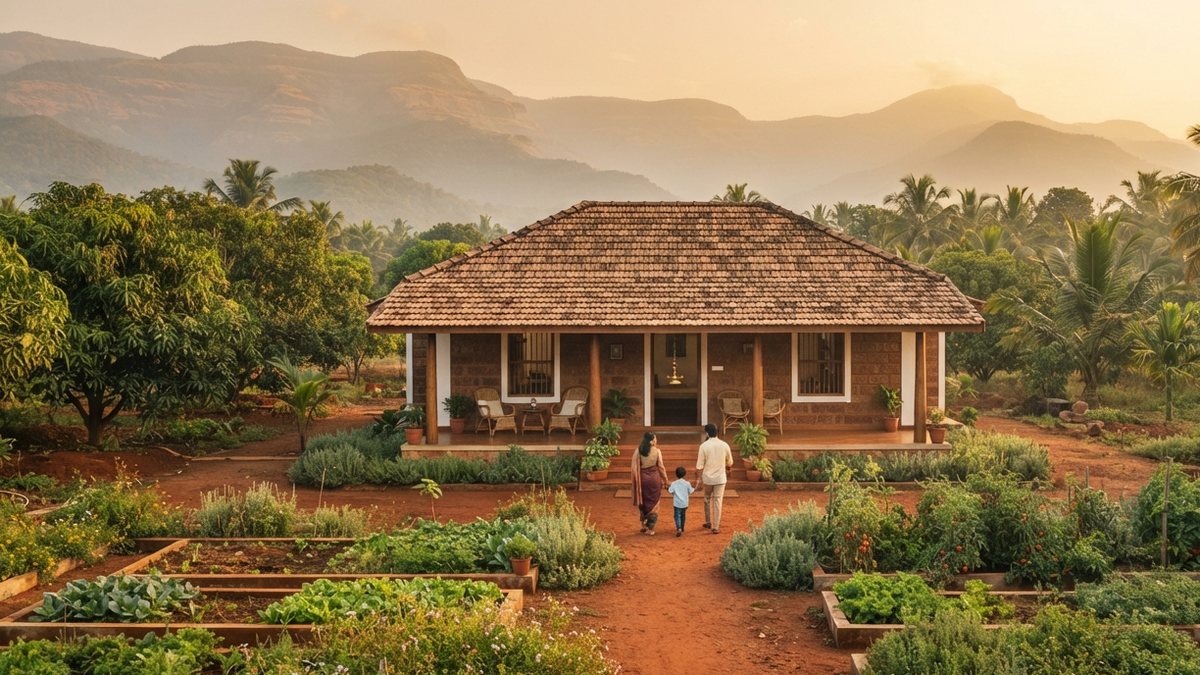
What is a farmstay? It is a place to stay on or beside farmland instead of in a hotel. You sleep close to fields, gardens or orchards. Meals and activities often follow the rhythm of the farm.
Some people book a farm stay for a short break. Others look at one as a property they might own someday. By the end of this guide, you will know what a farmstay offers and how to judge one.
What Is a Farmstay?
The term has two common uses. In the traditional sense, a farmstay is a guest room or cottage on a working farm. The host family often shares meals and farm life with you.
The newer sense is common near Indian cities. Here, a farmstay is a villa or farmhouse on farmland, run for guests. The land may grow crops or may simply be green space.
A farmhouse is a type of property. A farmstay is the guest accommodation offered on it. The same farmhouse may be used privately, rented out or run as a farmstay. A homestay differs again. It is a room in a family home that need not be near a farm.
How Does a Farmstay Work?
A farmstay works much like a holiday rental, but the experience is tied to the surrounding farmland. You can book a room, a cottage or a whole farmhouse. Some are hosted by farming families. Others are run by professional hospitality teams.
Stays may include meals, guided farm walks and use of leisure spaces. At working farms, you may watch or join supervised farm tasks. Inclusions and prices vary, so check what the booking covers before you pay.
What Are the Different Types of Farmstay Properties?
Farmstays differ in size, comfort and how much farming you will see. Four types are common.
Traditional Working Farmstays
Guests stay on an active farm, often in simple rooms close to the family home. You may see crops tended or animals fed. Comfort is basic, and the experience is hands-on. It suits curious travellers and families who want real farm life.
Farmhouse and Cottage Farmstays
These are standalone farmhouses or cottages on farmland. They offer more privacy than a shared farm home. Families and small groups often choose them. Meals may be hosted or self-catered, so ask first.
Luxury Farmstay Villas
Luxury villas pair a rural setting with private pools, spacious living areas and managed hospitality. Housekeeping and catered meals are common. They suit families or groups who want privacy and comfort with little farm work.
Eco-Friendly and Wellness Farm Stays
These focus on low-impact living and rest. Features may include organic produce, solar power, yoga spaces and quiet walking trails. They suit guests who want a slow break. Ask what a property actually offers, since labels vary.
What Are the Benefits of Staying at a Farmstay?
- Space and quiet. Open land often means less noise and fewer crowds than a city hotel.
- Fresh, local food. Some farms stay close to seasonal produce grown on site or nearby. This lets you try regional dishes.
- Room for groups. Villas and farmhouses suit families and friends travelling together.
- Things for children to do. Feeding animals and walking through fields give children a break from screens.
- Support for farm income. Guest spending can give farming families a second source of income.
There are trade-offs. Farmstays can be far from hospitals and shops. Amenities and quality differ widely. Weather can also change your plans.
What Activities and Facilities Can You Expect at a Farmstay?
Offerings depend on the property. Check the listing before you book.
Farming and Nature-Based Activities
| Activity | What to expect |
|---|---|
| Fruit and vegetable picking | Seasonal produce, depending on the farm |
| Feeding animals | Usually supervised and popular with children |
| Tractor or bullock-cart rides | Short farm rides, where offered |
| Nature walks and birdwatching | Trails through fields and greenery |
| Stargazing | Darker skies than most cities |
Accommodation and Leisure Facilities
- Stay: Rooms or cottages. Size and comfort vary.
- Dining: Farm-style meals, often made with local produce. Check if they are included.
- Recreation: Bonfire areas, indoor games or a pool, mainly in villa-style properties.
- Connectivity: Mobile signals and Wi-Fi can be patchy in rural areas.
Some properties are run by professional managers. Finplify's guide to a farm house stay in Bangalore describes four managed villa retreats, each run by a hospitality team.
What Should You Check Before Buying a Farmstay Property?
Staying is simple. Buying needs homework. Check these before you commit:
- Land title and records. Confirm ownership history, encumbrances and access rights with a qualified lawyer.
- Land classification and eligibility. Farmland often carries rules on who can buy it. These differ by state.
- Permissions for guest stays. Running a paid stay may need local approvals. Confirm the property can legally host guests.
- Operating costs. Staff, upkeep, utilities and booking-platform charges continue in months with few guests.
- Revenue assumptions. Income depends on seasonal demand and occupancy. It is not guaranteed.
- Exit options. Selling rural land can take time. Property values can also fall.
Owning farmland, running a farmstay and investing through a managed arrangement are different things. Each carries its own rights, duties and costs.
If buying a whole property needs too much capital, a fractional ownership India platform is another route. Here, several investors hold interests in one property. Interests differ by platform, so check the rights you receive along with fees and exit terms.
Conclusion
A short weekend stay is the easiest way to see whether a farmstay suits you. If ownership interests you, weigh your budget and running costs first. Then compare how different farm investment platforms present their offerings, including Finplify's managed farmland page.
This post is for information only and is not investment advice. Assess your own situation or consult a qualified professional before you decide.
Frequently Asked Questions
Is a Farmstay the Same as Agritourism?
Not exactly. Agritourism is the wider idea of bringing visitors to farms for any activity, such as day visits or harvest events. A farmstay is the overnight form of it.
Do Guests Have to Participate in Farming Activities?
Usually not. Most farmstays treat activities as optional. Some work-exchange stays do expect help with chores, so confirm the terms before you book.
Can You Stay at a Farmstay Without Owning Farmland?
Yes. Guests book a farmstay much like a hotel room or villa. Owning land only matters if you plan to run a farmstay yourself.
Are Farmstays Suitable for Children and Senior Citizens?
Often yes, with some checks. Children enjoy animals and open space, but pools, ponds and uneven ground need supervision. Seniors may want to ask about stairs, step-free access and the distance to medical care.
Can Farmstays Be Booked for Long-Term Stays?
Some can. Many hosts accept extended bookings or offer longer-stay arrangements. Policies vary by property, so confirm the terms and any stay limits with the host.
Can NRIs Purchase Farmstay Properties in India?
Generally not by purchase. Under RBI rules framed under FEMA, NRIs and OCIs can buy most immovable property in India but not agricultural land, plantation property or a farmhouse. NRIs can still stay at a farmstay as guests. Rules can change, so check current RBI guidance and consult an advisor.
Is Income From a Farmstay Tax-Free in India?
Not automatically. Agricultural income that meets the definition in section 2(1A) of the Income Tax Act, 1961 is exempt under section 10(1). Income from hosting paying guests may not meet that definition, so treatment depends on the facts. Consult a tax professional.